
Counterfeit U.S. coins may appear everywhere: in online lots, flea markets, small antique shops, and even at local shows. Some fakes are crude and easy to reject. Others pass through several hands before anyone questions them. Prices for many key dates stay high, so counterfeiters focus on the most popular series.
New collectors often assume fake coins look obviously wrong. Yet modern tools produce pieces with convincing color, weight, and artificial aging. A beginner sees metal that seems normal and a date that looks correct. Doubt appears only later, when details fail to match known patterns.
The natural question follows: how do you check authenticity if you have little experience? Can a free coin identifier help with the first steps, or at least reduce confusion? So, let us make things clear.
Why Certain U.S. Coins Are Targeted
Counterfeiters choose specific U.S. coins for simple and predictable reasons. Some dates stay expensive even in low grades. Others appear in series that beginners know well but understand poorly. This mix makes certain pieces ideal targets.
Three factors drive most counterfeiting:
- High market value.
Key dates keep strong prices and attract steady demand.
- Easy alteration.
Common low-grade coins can be reshaped into “rare” pieces with added mintmarks or modified digits.
- Weak buyer protection.
Online listings with blurry photos, vague descriptions, and no returns move fakes quickly.
A rare date inside a familiar series always catches attention. Many new collectors recognise the year but not the details that define an authentic example. This gap helps counterfeiters. Real coins follow strict patterns (number shapes, mintmark styles, relief depth), and fake pieces rarely match all of them. Online marketplaces amplify the problem because they remove direct inspection and encourage fast decisions.
U.S. Coins Most Frequently Counterfeited
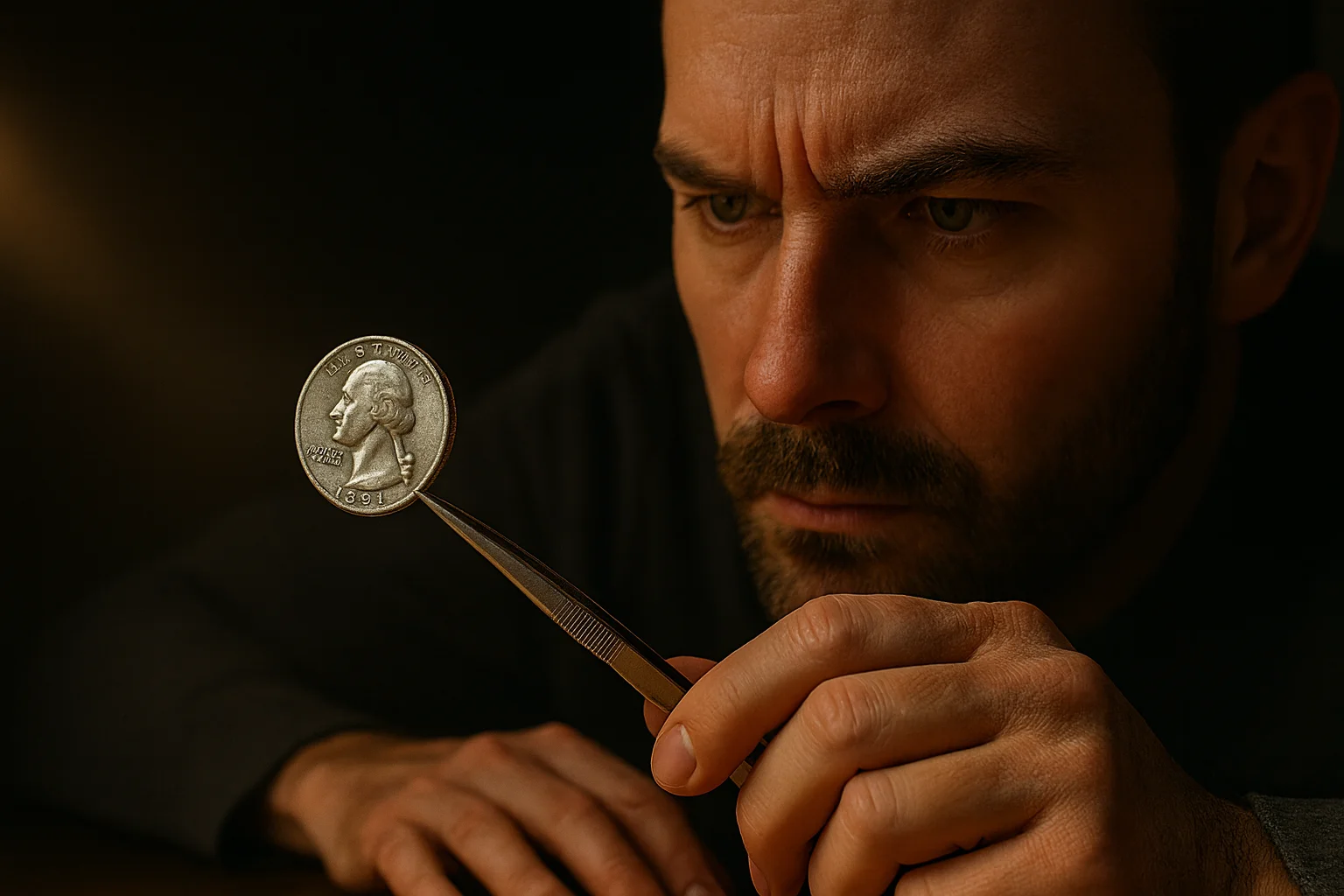
The coins listed below appear in fake form more than any others. Each one brings strong demand, clear profit potential, and predictable weaknesses that forgers try to copy. Some details below show what makes each coin a target and which details help you spot trouble quickly.
1909-S VDB Lincoln Cent
The first year of the Lincoln series brings steady demand, so even worn coins hold value. Most fakes start with a regular 1909 cent. Forgers add an S or reshape the VDB area to imitate the rare variety.
Points to check:
- Added S with wrong angle, depth, or shape.
- Irregular spacing of digits in “1909.”
- Polished or disturbed metal near the VDB.
- Weak lower reverse where genuine coins show firm lines.
1916-D Mercury Dime
This date is scarce in all grades. A genuine D mintmark is small, deep, and very specific. Counterfeiters apply a fake D or cut the metal to mimic one, then clean the coin to hide tool marks.
Points to check:
- Incorrect D size, style, or position.
- Rough or altered metal around the mintmark.
- Flat areas on the fasces instead of crisp lines.
- Uneven surface texture around the reverse.
1932-D and 1932-S Washington Quarters
Both dates have low mintages, so added mintmarks are common. Fakes usually begin with a normal 1932 quarter and receive a D or S in the wrong style or placement.
Points to check:
- Mintmark too high, too low, or in the wrong shape.
- Weak or uneven feather lines on the eagle.
- Shield details that look soft or unbalanced.
- Spacing around the wings that does not match genuine coins.
1893-S Morgan Dollar
One of the key dates of the series, often duplicated worldwide. Many counterfeits use incorrect metal or show poor relief. Weight is the fastest filter: a real Morgan weighs 26.73 grams.
Points to check:
- Weight below the correct standard.
- Grainy or porous surfaces on cast pieces.
- Shallow breast feathers on struck fakes.
- Relief that looks wrong for the coin’s wear level.
Altered Morgan and Peace Dollars
These are genuine silver dollars with changed digits or mintmarks. The base coin is real, so color and weight appear correct. Forgeries target expensive dates where simple alterations can multiply value.
Points to check:
- Digit shapes that look too narrow, sharp, or inconsistent.
- Disturbed metal around the mintmark.
- Mismatched wear between the date and the fields.
- Date spacing that does not follow known patterns.
Counterfeit U.S. Gold Coins (Quarter Eagles, Half Eagles, Eagles, Double Eagles)
High bullion value, strong collector demand, and popularity among buyers who may not specialise in gold series make gold coins a constant target. Many fakes are plated; others use a nonstandard alloy or thickness. Authentic examples follow strict weight rules.
Points to check:
- Weight deviations (e.g., a $10 Eagle must weigh 16.72 g).
- Incorrect diameter or thickness.
- Soft or uneven hair details.
How U.S. Counterfeits Are Usually Made
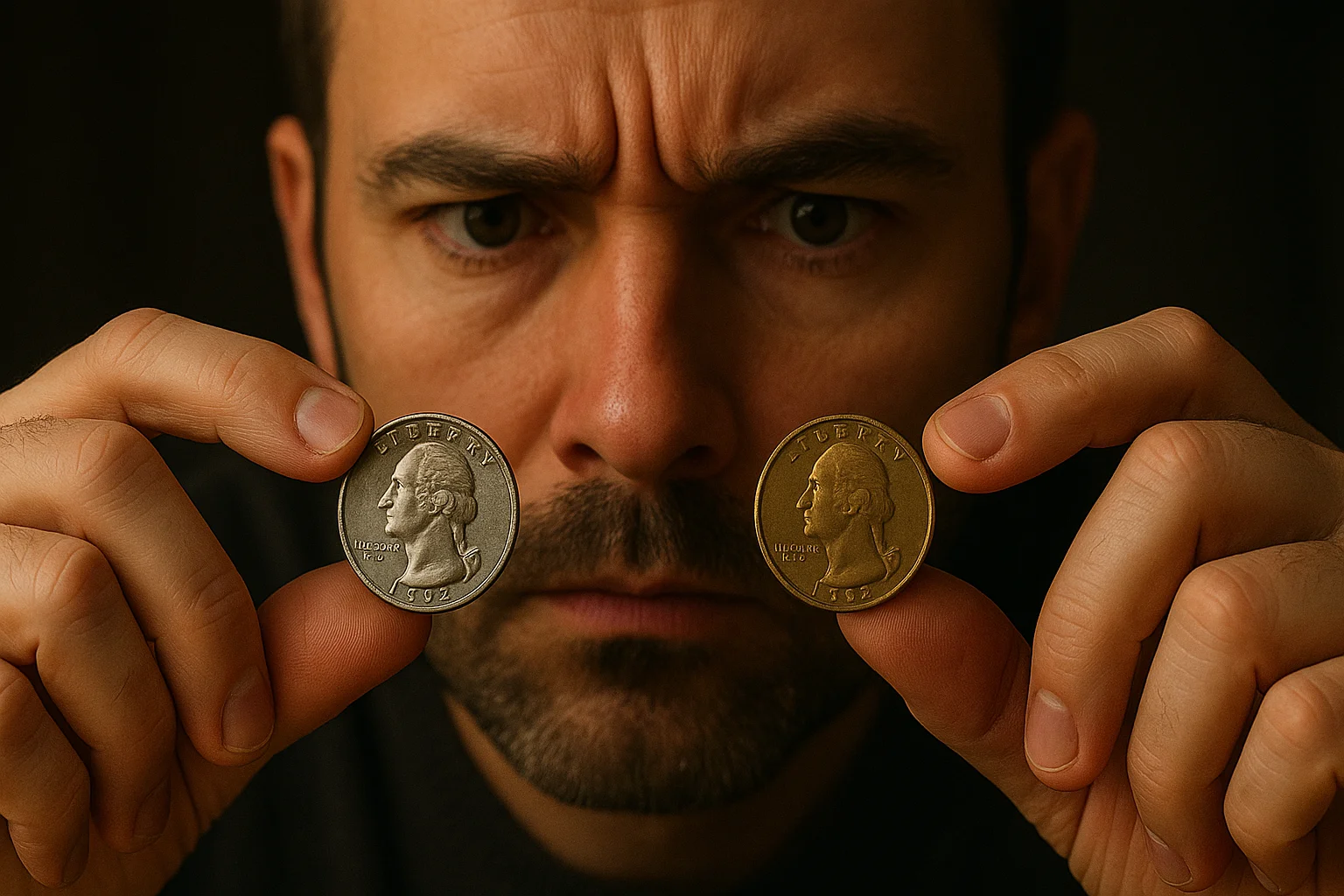
Different fake-making methods create different warning signs. Recognizing these patterns helps filter coins early.
Cast Fakes
Cast coins leave a porous surface. They lack the sharp edges produced by real dies. Small bubbles or pits appear across the fields. The rim often looks soft or swollen. Light does not reflect cleanly. When rotated, the surface seems cloudy rather than bright.
Struck Counterfeits
These counterfeits use real-style presses with homemade dies. Relief may look sharp at first glance, but incorrect metal gives a dull sound and unusual weight. Stroke direction on the relief does not match the real dies. Lettering sometimes looks stretched.
Altered Genuine Coins
This type is the most misleading. The coin starts as authentic. Tools reshape digits or letters. A modified mintmark hides under a thin layer of blending. A polished area around the date signals trouble. Under angled light, texture changes become visible.
Can Apps Detect Counterfeits? What They Actually Can Do
Many beginners hope that technology can solve the counterfeit problem. No application identifies fakes directly. Algorithms compare your photo to a catalog and return the closest match. They do not evaluate authenticity.
Still, a coin identifier app remains useful. It gives the correct type, expected design, metal, and years of issue. This allows you to check whether your coin matches the description. If the app shows a silver coin but your piece looks copper-toned, you should question it. If the design elements do not align with the catalog image, that is a warning sign.
Take Coin ID Scanner, for example. The app lists weight, diameter, metal, and date ranges. If these parameters differ from your coin, you know something is wrong. The app becomes a filter, not an authentication tool. Final decisions rely on visual inspection and measurements.
Why Visual Knowledge Still Matters More Than Any Tool
Apps help with cataloging, but recognition still depends on your eyes. Every U.S. series has stable design traits: number shapes, serif angles, rim height, spacing of letters, and texture across the fields. Counterfeiters can copy some of these points, but rarely all of them. A collector who studies genuine coins builds a baseline that no tool can replace.
Real coins also age in consistent ways. Copper darkens slowly. Silver tones with natural transitions. Nickel picks up fine matte zones. Fakes often skip these changes or force them with chemicals. Artificial toning shows sudden shifts in color or patterns that stop abruptly. When you know how natural ageing looks, spotting problems becomes easier.
A few habits make this process reliable:
- Use side lighting to reveal micro-relief, tool marks, and disturbed metal.
- Tilt the coin to study metal flow and confirm natural strike patterns.
- Compare with verified coins from guides or grading services to learn correct proportions.
- Check several examples at once; patterns appear faster when the eye moves across a group, not a single piece.
- Record what you see; notes help you remember number shapes, mintmark angles, and surface behavior.
These steps give you a framework that works with or without technology. Apps help you organise coins, but visual knowledge protects you from the most convincing counterfeits.
Step-by-Step Protection: What You Really Can Do
This section provides a clear method. Follow these steps each time you examine a coin. The system works for cents, dimes, quarters, dollars, and gold pieces.
- Check Weight
Use a scale accurate to 0.01 grams. Compare with official specifications. Real coins rarely deviate more than 1–2%. Larger differences signal counterfeit metal or an altered structure.
- Measure Diameter and Thickness
A simple caliper reveals many fakes. Altered coins often have slightly changed dimensions. Even 0.2 mm matters. Compare with reference data. Genuine coins follow strict standards.
- Inspect Digits, Letters, and Mintmarks
Use soft side light. Check the form of each number. Look at the depth and direction of strokes. Real mintmarks have consistent shapes across authentic coins. Any mismatch deserves caution.
- Study the Edge
Reeded coins show precise, evenly spaced ridges. Fakes often display irregular spacing or soft edges. On plain-edge coins, the metal texture should remain smooth. Any filing marks are red flags.
- Compare with Certified Photos
Use high-resolution images from PCGS or NGC. Match number shapes, relief lines, and spacing between letters. This step exposes many altered coins immediately.
- Look for Signs of Altered Surfaces
Tool marks, unnatural shine, or uneven toning reveal modifications. A mintmark surrounded by disturbed metal suggests tampering. Examine areas above and below the digits.
- Stop When Something Feels Wrong
If anything seems off: weight, relief, mintmark placement, pause. Do not buy a questionable coin without more information. Uncertainty is a valid reason to walk away.
When You Should Seek Professional Authentication
Some coins deserve full certification. Choose professional grading when:
- The value is high enough to justify the fee.
- The coin belongs to a series with known counterfeit activity.
- The weight or diameter does not match, but the coin looks convincing.
- You plan to sell the piece and want a verified result.
- You found the coin in a mixed lot with unclear origins.
A genuine high-value coin benefits from a slab. A fake becomes obvious once examined by experts.
FAQs: Practical Questions About Counterfeits
- Which U.S. coins are faked the most
Lincoln key dates, rare Mercury dimes, early Washington quarters, key Morgan dollars, and U.S. gold pieces.
- Can weight alone confirm a fake?
No. Some altered coins use real metal and match the weight. Still, weight is a fast filter.
- Why do fake mintmarks look wrong?
Counterfeiters rarely match original dies. Shape, depth, and position often differ.
- Are cleaned coins easier to fake?
Cleaning hides marks from alterations. A polished surface should always raise suspicion.
- Can apps mislabel coins?
Yes. Low-quality photos or lighting lead to wrong matches. Use apps as a reference, not the final judgment.
- Where should I avoid buying coins?
Listings with blurry photos, no returns, or vague descriptions. These places often circulate fakes.
- How do I tell damage from forgery?
Damage follows natural patterns. Forgery often focuses on key digits or mintmarks.
Final Points
Counterfeit U.S. coins remain a steady challenge, but careful habits reduce risk. Study real examples, measure each coin, check mintmarks, and compare with certified images. Use the coin app for Android that helps you understand the correct specifications and design layout, then make judgments based on what you see. A simple routine protects both your budget and your collection, and each coin you examine builds confidence for the next search.