
The 2025 dime error is the phrase many collectors search for first, but the better starting point is simpler. Most 2025 dimes are still common modern coins. The stronger premiums come from type, strike quality, and a small group of reported mint-made problems. That is why the year should be split into normal business strikes, proofs, silver proofs, and possible error pieces before any price guess is made.
So, let’s discuss the 2025 issue and error pieces in detail.
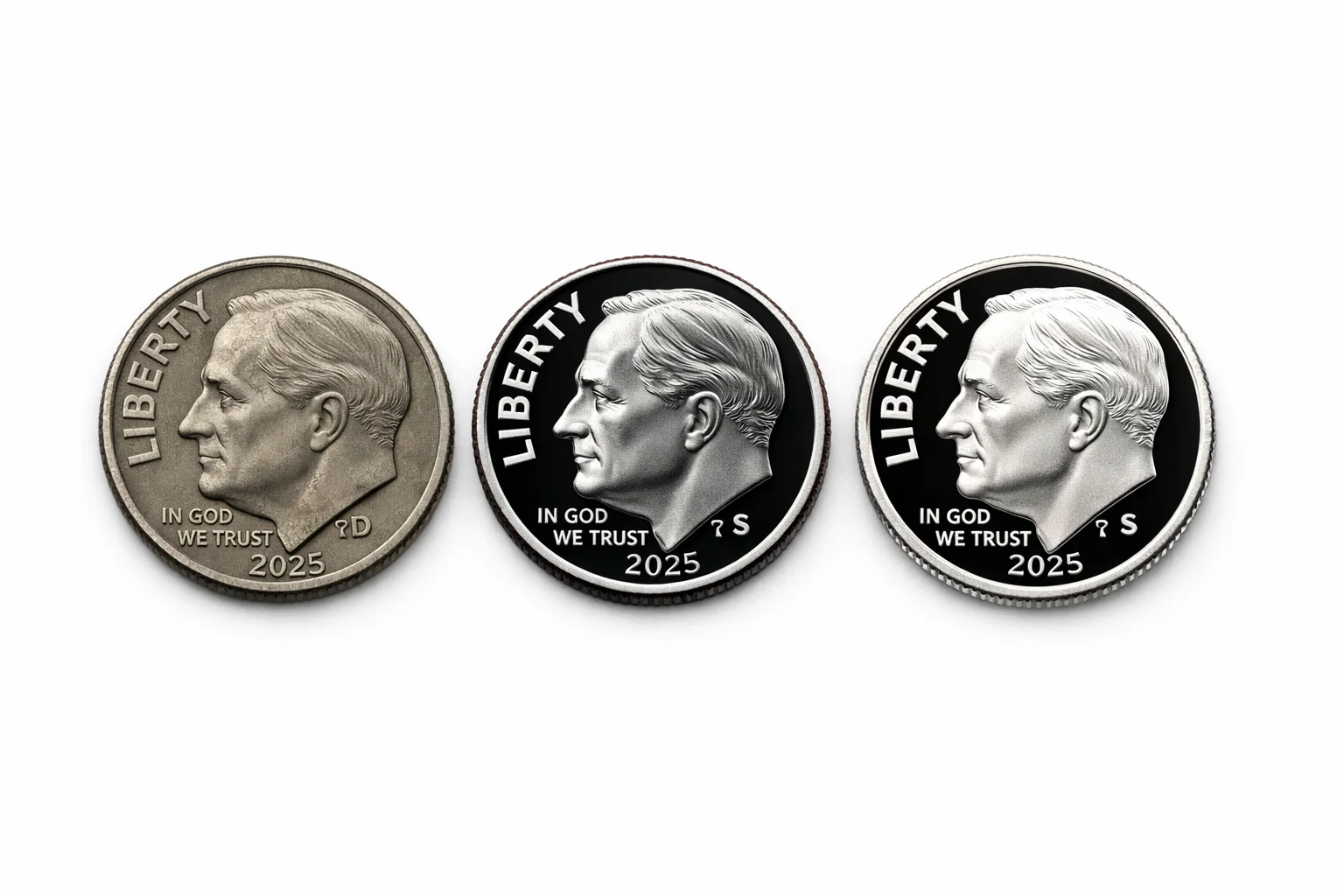
2025 Dime Basics
The 2025 dime market is not one market. It is four smaller ones.
- 2025-P business strike
- 2025-D business strike
- 2025-S clad proof
- 2025-S silver proof
The U.S. Mint’s dime page and 2025 Silver Proof Set page support that split. The silver proof dime is .999 fine silver, while the regular P and D coins are standard clad circulation issues. That one difference changes the price structure right away.
| Type | Mintmark | Format | Approximate Value Range |
| Business strike | P | Clad circulation coin | $0.10–$2.50+ |
| Business strike | D | Clad circulation coin | $0.10–$2.50+ |
| Proof | S | Clad proof | $3.08+ |
| Silver proof | S | .999 fine silver proof | $15+ |
This table shows the first useful fact about the year. The easiest premium coins are not the P and D circulation dimes. They are the two San Francisco collector issues, especially the silver proof.
Why Most 2025 Dimes Are Still Common
A 2025 dime from circulation is usually just a dime. That is the clean reading of the year. Public price guides place the P and D coins around face value in circulation and only in the low-dollar range for ordinary uncirculated pieces. That is not key-date behavior. It is normal modern-coin behavior.
Most 2025 dimes stay common because:
- They were made for circulation
- They are easy to replace
- The year is not scarce by date
- The market pays for quality, not novelty
That point matters because many fresh coins look “special” at first. Bright surfaces alone are not enough. The market usually waits for a better strike, fewer marks, and stronger grading potential before a normal P or D coin moves into a premium tier.
Where the Value Starts
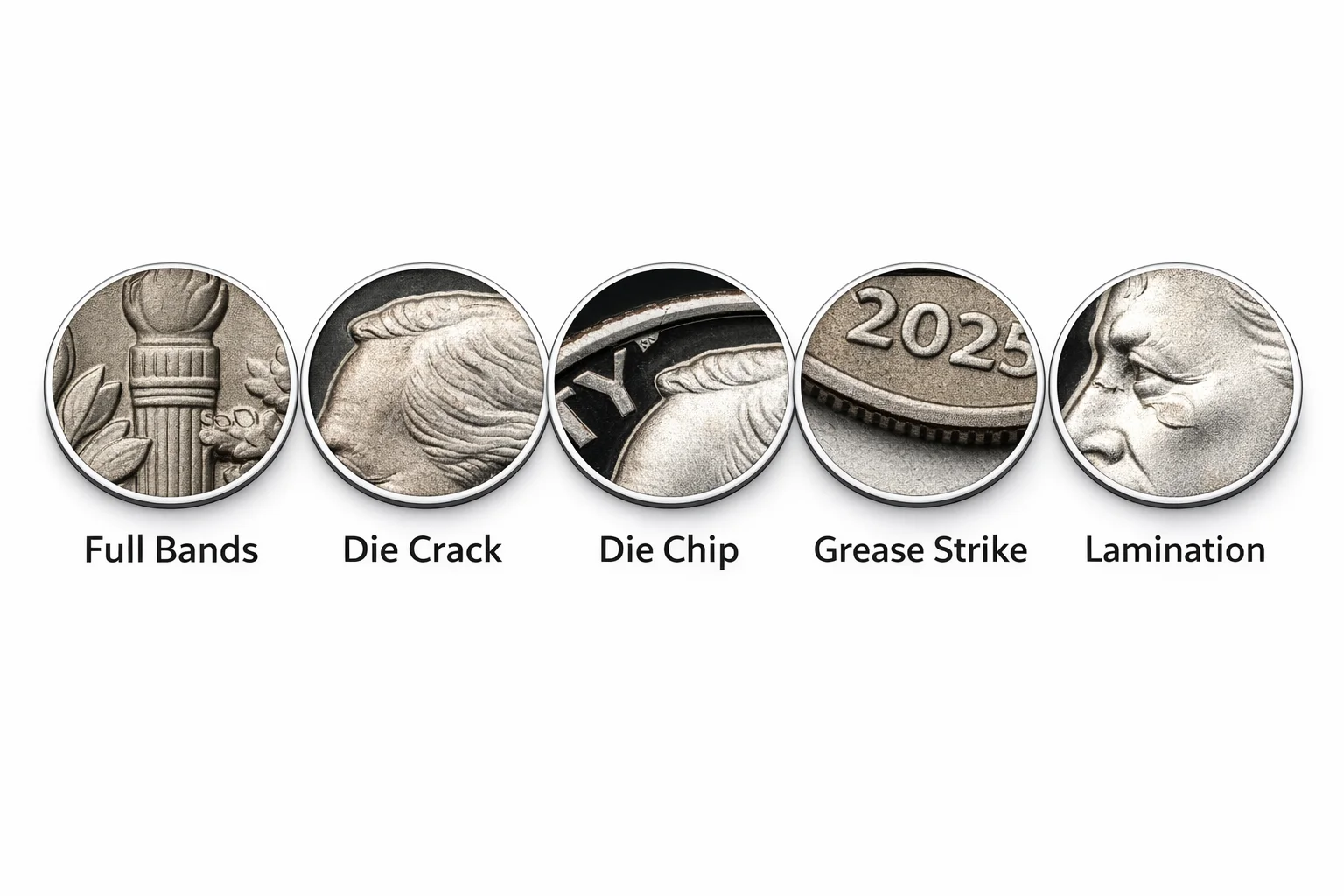
For regular 2025-P and 2025-D dimes, the value starts late. The first real separator is not the date. It is quality. Cleaner fields, fewer hits, stronger luster, and sharper bands on the torch matter more than the year itself. That is the practical collector filter for a modern Roosevelt dime.
A regular 2025 dime becomes more interesting when it has:
- Minimal contact marks
- Better-than-average strike
- Stronger torch detail
- Possible Full Bands quality
- Clear top-grade potential
That does not mean every sharp coin should be saved. It means average business strikes should be spent, while obviously stronger ones deserve a second look.
Proof And Silver Proof: The Easy Premium Coins
The 2025-S clad proof already sits above face value because it was made for collectors. It belongs to the normal proof market. The 2025-S silver proof sits higher because it adds metal value to the proof format. The U.S. Mint confirms the silver proof dime is .999 fine silver, and public value guides already place it far above the clad proof.
| Type | Approximate Value Range | Why It Sells Higher |
| 2025-P / 2025-D circulated | $0.10 | Face-value coin |
| 2025-P / 2025-D ordinary uncirculated | $2.50+ | Small modern premium |
| 2025-S clad proof | $3.08+ | Collector proof issue |
| 2025-S silver proof | $15+ | Silver plus proof format |
This table gives the easiest answer in the article. If the goal is to save what already stands above ten cents, the silver proof is the clearest choice. The clad proof is also an easy keep. Regular P and D dimes are selective saves only.
The Error Side of 2025 Dimes
The error story for 2025 is more mixed. There is not yet one famous cataloged variety that defines the year in the public market. Instead, collector channels and marketplace listings show a cluster of reported mint-made problems. That means caution is needed. Some pieces are interesting. Not every claim is established.
What Is Worth Watching And What Is Not
The easiest way to read 2025 dime errors is to split them by strength.
More worth watching:
- Strong die cracks
- Larger reverse die chips
- Clear feeder finger gouges
- Obvious strike-through grease
- Strong lamination-style defects
- Authenticated double dies
- Any major wrong-planchet or off-center piece
Usually not enough by itself:
- Tiny chips
- Weak cracks
- Minor blur-like doubling
- Random scrapes
- Ordinary contact marks
- Damage after circulation
That filter is more useful than chasing every odd-looking dime.
Reported 2025-P Problems
Reported 2025-P pieces include die chips on the reverse near the torch and olive branch, die cracks on the obverse, and feeder finger damage described as die gouges from the feeding mechanism.
These are being discussed and sold in collector channels, but they are not all equal. A large, obvious die crack is more interesting than a tiny chip. A real feeder finger gouge is more interesting than a random scrape.
The practical rule is simple. Save the stronger examples. Ignore the weak ones.
Reported 2025-D Problems
Reported 2025-D pieces include strike-through grease on one or both sides and lamination or missing-surface style flaws on the reverse. Strike-through grease is a real mint-error category.
The struck-through errors happen when foreign material, including grease, comes between the die and the coin during striking. That category is legitimate. The premium still depends on how clear the effect is. Weak grease strikes are usually less important than dramatic ones.
The lamination side needs more care. A missing layer or flaking surface can be meaningful, but it must be separated from later damage. Strong visual effect helps. Clear mint-made origin matters even more. Collector forums and market listings mention these 2025-D pieces, but they still need careful individual review.
Suspected Doubled Dies
Potential 2025-D doubled die coins are being reported by collectors and sellers. That does not make them established varieties yet. Marketplace claims and social posts are not enough on their own. They need authentication. On modern dimes, machine doubling and weak distortion can look convincing in photos. That is why this part of the year should be treated as “possible but unconfirmed” unless a solid attribution appears.
This is the part many collectors get wrong. A suspect DDO or DDR may be interesting. It is not the same as a recognized premium variety.
A Practical Sorting Rule
A collector does not need to save every 2025 dime. A better rule works in layers.
Usually worth saving:
- 2025-S silver proofs
- 2025-S clad proofs
- Very strong P or D business strikes
- Obvious major mint errors
- Verified varieties
Usually safe to spend:
- Worn P and D coins
- Average bankroll coins
- Small die chips with little visual impact
- Weak strike-throughs
- Unverified doubled-die claims
This keeps the year manageable. It also keeps common coins from piling up without reason.
Remember that the free coin scanner app can help separate those tiers, keep coin details together, and stop stronger pieces from being spent by mistake. That is more useful than treating every 2025 dime as if it belonged to one category.
FAQs
Is the 2025 dime rare?
No. The year is not a key date. Most P and D coins are common.
Which 2025 dime is the best one to save?
The 2025-S silver proof is the clearest regular keep. It combines proof quality with .999 silver.
Are 2025-P and 2025-D Dimes Worth More Than Face Value?
Most are not. Only stronger uncirculated pieces and top-quality examples move above ordinary levels.
Does Full Bands designation matter for 2025 dimes?
Yes. Strong torch band detail is one of the few practical premium filters for regular business strikes.
Are 2025 dime errors already worth looking for?
Yes, but carefully. Die cracks, chips, feeder finger gouges, strike-through grease, lamination-style flaws, and suspected doubled dies are being reported. Stronger and clearer examples matter more.
Is every odd-looking 2025 dime an error?
No. Many unusual marks are just damage, weak distortion, or minor production flaws with little premium.
Conclusion
Most 2025 dimes are common. The coins that move beyond ten cents fall into three groups: proofs, silver proofs, and clearly better business strikes. The error side is real, but it needs restraint. Strong mint-made pieces deserve attention. Weak flaws do not.
Use the best coin identifier app for quick value estimates, and sorting dimes by type, keeping coin details together, and separating stronger pieces from ordinary spenders. The Coin ID Scanner app is useful for organization and answering questions with the built-in AI helper once the collector already understands what belongs in each tier.